


How to Revive Your White Leather Sneakers (and keep them looking fresh)
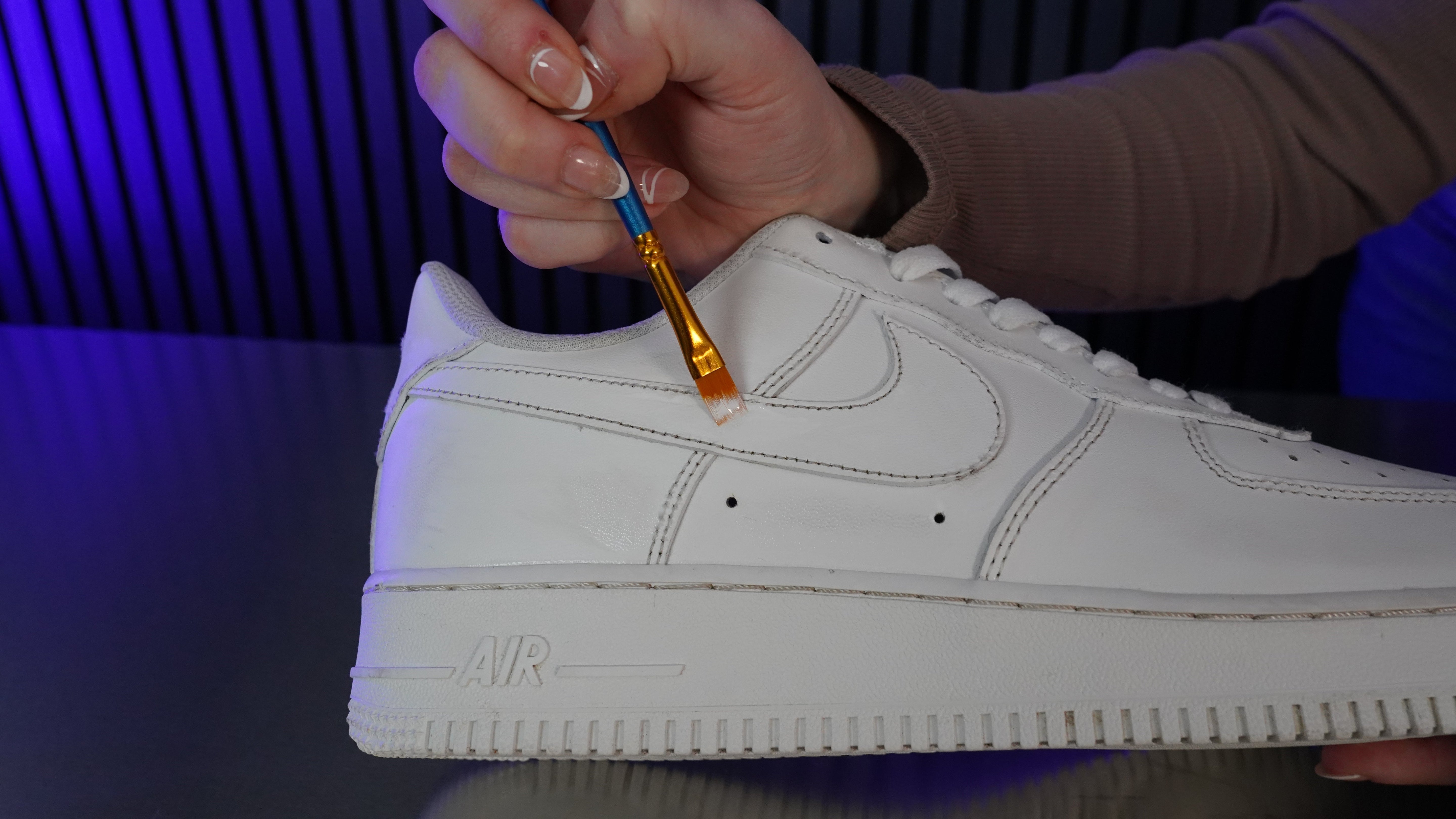
Even well-cared-for sneakers eventually start to lose their colour. Sun exposure, daily wear, and repeated cleaning slowly break down the original finish on leather uppers. Over time, bright colours begin to look dull and white leather can appear patchy or uneven.
While many people assume faded sneakers are beyond saving, leather footwear can often be restored surprisingly well. With the correct preparation and the right type of leather paint, it’s possible to revive faded colour and significantly improve the appearance of worn sneakers.
This guide explains when repainting sneakers is appropriate, how the process works, and the safest way to restore faded leather.

Why Sneakers Lose Their Colour
Most leather sneakers are finished with a thin layer of pigment and protective coating. This finish gives the shoe its colour and helps protect the leather underneath.
Over time, that coating gradually breaks down. Friction from walking, exposure to sunlight, and aggressive cleaning products all contribute to the fading process. The result is often uneven colour, especially around toe boxes, creases, and heel areas where the shoe flexes most.
Once this surface colour has worn away, cleaning alone cannot restore the original appearance. At this stage, carefully applied leather paint can be used to rebuild the colour layer.
When Leather Paint Can Restore Sneakers
Repainting works best on sneakers made from smooth leather or coated leather. In these cases, the underlying material is still structurally sound and only the surface colour has deteriorated.
This restoration approach is commonly used for:
- Smooth leather trainers
- White sneakers that have become dull or yellowed
- Coloured leather panels that have faded unevenly
However, leather paint is not suitable for every type of sneaker. Materials such as suede, nubuck, mesh, or knit fabrics require completely different restoration techniques. If the upper is cracked or peeling synthetic leather, repainting may improve appearance temporarily but will not solve deeper material damage.

Preparing Sneakers for Colour Restoration
The most important part of sneaker repainting happens before any paint is applied. Proper preparation ensures the new colour bonds correctly with the leather and remains flexible when worn.
Start by thoroughly cleaning the sneakers with The Shoe Clinic Leather Cleaner to remove dirt, oils, and residue. Even small amounts of contamination can prevent paint from adhering properly. Once clean, it is best practice to lightly wipe the surface with a preparation solution or alcohol-based cleaner. The Shoe Clinic Leather Deglazer is perfect for this job. This removes remaining finishes and creates a surface that allows the paint to bond with the leather.
Masking tape is then used to protect areas that should not be painted. Midsoles, rubber outsoles, logos, and stitching are typically covered to maintain sharp edges and prevent accidental colour transfer.

Applying Leather Paint to Restore Colour
Leather paint designed for footwear is flexible and formulated to move with the leather as the shoe bends. The key to achieving a natural finish is applying the paint slowly and gradually.
Instead of applying one thick layer, the paint should be built up through several very thin coats. Each coat is allowed to dry before the next is applied. This process creates an even colour while maintaining the flexibility of the leather surface.
Trying to cover fading in a single heavy layer is one of the most common mistakes people make when repainting sneakers. Thick coats tend to crack, feel stiff, and often leave visible brush marks. Building colour gradually produces a much more durable and professional-looking result.
Allowing the Paint to Cure
After the final layer of paint has been applied, the sneakers should be left undisturbed for a full curing period. During this time the paint bonds fully with the leather and becomes more resistant to wear.
The shoes should remain at room temperature and should not be flexed or worn while the finish sets. Rushing this stage can weaken the bond between the paint and the leather surface.
Sealing the Restored Finish
Once the paint has cured, a protective leather finisher can be applied. This sealant helps protect the new colour from abrasion and restores the natural sheen of the leather.
The Shoe Clinic Leather Finish is available in Matt, Satin or Gloss finish, allowing it to match the original appearance of the sneaker. A matte or satin finish is most commonly used for modern trainers.